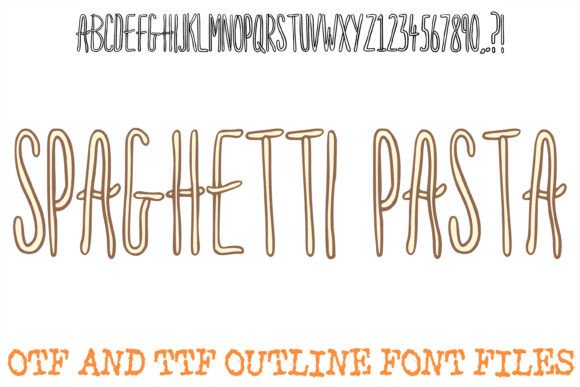
Spaghetti Pasta: A Typeface with Warmth and Whimsy
There's a certain magic in the way a single strand of spaghetti curls around a fork—graceful, unpredictable, and full of character. Capturing that same spirit in a typeface is no small feat, yet the Spaghetti Pasta font achieves it with surprising elegance. This isn't just another display font; it's a design tool that brings a handcrafted, tactile feel to any project, instantly evoking the warmth of a kitchen, the charm of a family-owned trattoria, or the playful energy of a food festival. For designers and creatives, it offers a unique way to inject personality and storytelling into visual communication.
More Than Just a Pretty Letterform
At its core, the Spaghetti Pasta font is a tall, slender display typeface inspired by the organic, flowing shapes of al dente pasta. Its elongated letterforms feature soft, rounded terminals and a warm, cream-colored palette that feels both inviting and sophisticated. The design masterfully blends hand-drawn outlines with a clear, legible structure, giving each character a flexible, tactile personality. This balance is key—it’s whimsical enough to be fun, yet refined enough for professional applications. Think of it as the typographic equivalent of a beautifully plated dish: it’s artistic, but every element serves a purpose.
What sets this font apart in a crowded market of creative fonts is its ability to convey comfort and craftsmanship simultaneously. The subtle imperfections in its outlines mimic the hand of a skilled artisan, making it perfect for brands that want to communicate authenticity, quality, and a human touch. It’s a premium font that doesn’t just look good; it tells a story.
Bringing Authentic Flavor to Branding and Packaging
For small business owners and entrepreneurs in the food and lifestyle space, typography is a silent ambassador for your brand. Choosing the right typeface can mean the difference between looking generic and establishing a memorable identity. The Spaghetti Pasta font excels here, particularly for artisanal food products, gourmet delis, Italian restaurants, and specialty bakeries.
Imagine this font gracing the label of a handmade pasta sauce or the menu of a cozy neighborhood eatery. Its inherent warmth builds an immediate emotional connection with the customer, suggesting care and tradition. In packaging design, it can transform a simple product into a giftable item, enhancing perceived value. When used for a logo, it creates a mark that is instantly recognizable and full of personality, helping to solidify brand recognition in a competitive market.
A Dynamic Tool for Digital and Social Media
In the fast-paced world of digital content, grabbing attention is paramount. The Spaghetti Pasta font, with its high-contrast and whimsical aesthetic, is a powerful asset for creating engaging social media graphics, blog headers, and website elements. A food blogger, for instance, could use it for post titles to create a cohesive, inviting visual theme that readers will come to associate with their content.
For social media managers, it’s ideal for creating vibrant, shareable content for food festivals, cooking classes, or promotional campaigns. The font’s playful nature encourages engagement, making it perfect for Instagram stories, Pinterest pins, and Facebook ads. When used thoughtfully as a headline font on a website, paired with a clean sans serif or serif font for body text, it can create a stunning visual hierarchy that guides the visitor’s eye and reinforces the site’s overall brand identity.
Practical Tips for Using This Display Typeface
While the Spaghetti Pasta font is incredibly versatile, its effectiveness depends on smart application. As a display font, it’s designed for impact at larger sizes—think headlines, logos, and featured text. Using it for long paragraphs of body copy would compromise readability. The key is to let it shine where it’s meant to: as a headline act, not a background player.
A crucial step in any project is testing font pairings. This typeface pairs beautifully with simple, neutral companions. A classic sans serif font can provide a clean, modern counterbalance, while a straightforward serif can add a touch of traditional elegance. For a truly cohesive design, consider using the Spaghetti Pasta font for main headings and a complementary script or handwritten font for subheadings to maintain the handcrafted feel without overwhelming the viewer.
Before finalizing your design, always review the included font styles. Many premium fonts come with alternates, ligatures, or stylistic sets that can add an extra layer of uniqueness to your work. Finally, if you’re using the font for commercial projects—like merchandise, client work, or marketing assets—ensure you understand the licensing. A proper commercial license is an investment in your brand’s professionalism and legal security.
Elevating Print and Editorial Projects
Beyond the digital realm, this typeface brings immense value to print materials and editorial layouts. Consider its use in invitations for a rustic Italian-themed wedding or a culinary event; it sets the tone before a single word of the copy is read. For posters promoting a farmers' market or a cooking workshop, its eye-catching design ensures the message stands out.
In editorial design, such as a food magazine or a cookbook, the font can be used strategically for chapter titles, pull quotes, or section headers to break up the text and add visual interest. It helps create a rhythm on the page, making the publication more enjoyable to read and visually dynamic. For entrepreneurs creating lookbooks or digital products like recipe e-books, incorporating this font into the design assets adds a layer of perceived quality and care that resonates with customers.
The true power of a font like Spaghetti Pasta lies in its ability to bridge the gap between functionality and emotion. It’s a tool that doesn’t just display words; it enhances the message, builds a mood, and connects with an audience on a visceral level. Whether you’re building a brand from the ground up or refreshing an existing visual identity, incorporating a typeface with this much character can be the secret ingredient that makes your design truly memorable.