KidBit: Your Ticket to Authentic 8-Bit Charm
There’s a specific kind of magic that happens when you see chunky, pixelated text on a screen. It doesn’t just read; it transports you. Suddenly, you’re holding a joystick, the smell of carpet and ozone is in the air, and you’re trying to beat the high score. If you are looking to capture that specific, visceral feeling for your next design project, KidBit is the typeface that bridges the gap between the nostalgic past and the crisp, digital present.
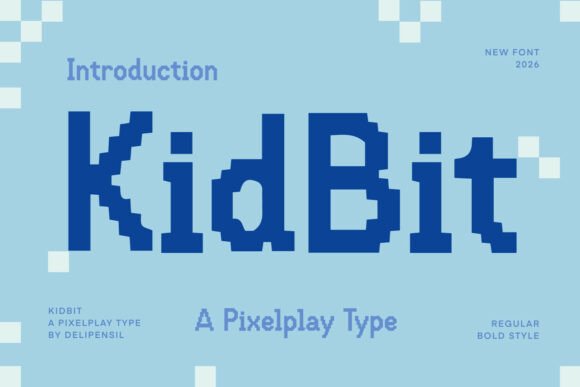
KidBit isn’t just another novelty font. It is a carefully constructed display typeface that channels the low-resolution energy of vintage arcade monitors and retro gaming consoles. However, unlike the jagged, hard-to-read text of the actual 1980s, KidBit utilizes clean, modern vector precision. It features thick, bold block characters with a deliberate "stair-step" anatomy. This means you get the aesthetic of the old school without sacrificing the scalability and clarity required for modern high-definition screens. It arrives in both Regular and Bold styles, giving you the flexibility to build a complete visual hierarchy based on that iconic digital block layout.
The Anatomy of Digital Nostalgia
What makes KidBit visually appealing to such a wide audience? It comes down to the concept of "legible nostalgia." Many retro fonts fail because they prioritize style over function, resulting in characters that blur together. KidBit solves this by balancing its pixel-art roots with modern design principles. The characters are built on a grid that feels familiar to anyone who has ever opened a pixel editor, yet the curves and diagonals are handled with a smoothness that prevents visual fatigue.
For designers, this premium font offers a unique texture. It is bold, unapologetic, and commands attention immediately. When you set a headline in KidBit, you aren’t just placing words on a canvas; you are injecting personality. The font works exceptionally well for branding projects that need to feel approachable, fun, and slightly mischievous. It avoids the sterile look of many modern sans serif fonts while steering clear of the stuffiness of traditional serif fonts.
Practical Applications: From UI to Packaging
The versatility of a font like KidBit is often underestimated. While it is an obvious choice for retro video game UI headers and streaming channel graphics, its utility extends far beyond the gaming niche. Because the letterforms are so distinct, they serve as powerful anchors in a variety of creative contexts.
Consider the world of packaging design. If you are a small business owner creating children’s toy packaging or launching a line of artisanal hot sauces with a "gamer" theme, KidBit provides an instant visual shorthand. It tells the customer exactly what vibe to expect before they even read the product description. Similarly, in merchandise design—think T-shirts, enamel pins, or tote bags—the bold weight of the font ensures that the message is readable from a distance.
Here are a few specific scenarios where KidBit shines:
- Logo Design: Creating a wordmark for a tech startup or an indie game studio that needs to look established yet edgy.
- Event Invitations: Designing flyers for a retro arcade night, a board game tournament, or a themed birthday party.
- Editorial Layouts: Using the font for pull quotes or section headers in a magazine or blog layout to break up long blocks of text and inject visual interest.
- Marketing Assets: Designing social media graphics where the goal is to stop the scroll. The blocky nature of KidBit renders perfectly even on small mobile screens.
Integrating KidBit into Your Brand Identity
One of the most significant challenges in web design and brand identity is consistency. You want your brand to feel cohesive across every touchpoint, from your website header to your invoice templates. KidBit serves as an excellent tool for establishing that consistency, particularly for brands targeting a demographic that grew up in the 80s and 90s or younger audiences who have embraced the retro revival.
However, using a display font effectively requires strategy. Because KidBit is a high-impact font, it is best suited for headlines, titles, and short bursts of text. It is not designed for body copy. If you try to write a full paragraph in KidBit, the visual density of the blocks can become overwhelming. The key to professional presentation is pairing KidBit with a clean, neutral typeface for your body text. A simple geometric sans serif font or a clean script font can provide the necessary contrast, allowing KidBit to pop without cluttering the design.
Readability and Font Pairing Strategies
When working with modern typography, readability is king. Even the most beautiful design asset fails if the audience can't decipher the message. With KidBit, you need to pay attention to scale. Because of its blocky nature, it generally requires a slightly larger font size than a standard handwritten font or serif to maintain legibility.
Here is a practical tip for testing your font pairing: Create a mockup of your landing page or packaging. Set your main headline in KidBit Bold and your sub-headline in KidBit Regular. Then, choose a sans-serif font for your description text. Zoom out to 50% on your screen. If you can still read the headline clearly, you have found the right balance. If the pixels blend into a gray blob, you need to increase the tracking (letter spacing) or the font size.
KidBit also offers two distinct styles: Regular and Bold. Use the Bold style for primary calls to action or main headers where you need maximum impact. Use the Regular style for secondary information, such as dates, locations, or sub-categories. This variation allows you to create a visual hierarchy that guides the viewer's eye naturally through your design.
Licensing and Commercial Use
For entrepreneurs and business owners, the legal side of design is just as important as the creative side. When you acquire a commercial font like KidBit, you are typically purchasing a license that covers specific use cases. Whether you are using it for a client’s logo design, a run of printed merchandise, or digital products, it is crucial to review the licensing agreement.
Most design assets come with different tiers of licensing—often separating desktop use (for print and logos) from web use (for CSS embedding) and app use. Since KidBit is a premium font, investing in the correct license protects your business and supports the type designers who craft these tools. Always double-check if the license covers the number of impressions for your social media campaigns or the number of physical units you plan to produce.
Why Retro Design Still Resonates
In an era of flat design and minimalism, the resurgence of pixel art and 8-bit aesthetics might seem counterintuitive. Yet, the popularity of KidBit and similar creative fonts proves that audiences crave texture and personality. Retro design offers a sense of comfort and authenticity. It signals that a brand doesn't take itself too seriously, yet it values craftsmanship.
Using a typeface like KidBit is a powerful way to differentiate your project. It moves away from the "bland corporate" look and injects a sense of playfulness that can make your marketing assets more engaging. Whether you are a content creator looking for a signature look for your thumbnails, or a designer working on a tech branding campaign, KidBit provides that legendary childhood arcade cool.
Ultimately, typography is about communication. KidBit communicates fun, nostalgia, and digital precision. It is a versatile tool that, when used thoughtfully, can elevate your layouts from simple text arrangements to memorable visual experiences. If you are ready to boot up a new era of creativity for your brand, this pixel display typeface is ready to press Start.