Graffiti City: Injecting Bold, Urban Energy Into Your Designs
There's a certain energy to city streets—a visual rhythm captured in the bold, swollen letters of a mural that dominates a brick wall. It’s confident, playful, and impossible to ignore. For designers, capturing that authentic, hand-painted street art vibe can be a challenge, often requiring hours of custom illustration to get just right. However, there’s a powerful tool that bridges the gap between raw urban expression and professional design work: a typeface built to emulate that very spirit. If you’ve ever wanted to bottle the kinetic energy of a vibrant cityscape and apply it to your branding or creative projects, you’re looking at a solution that delivers volume, personality, and impact in every character.
Capturing the "Bubble-Letter" Aesthetic
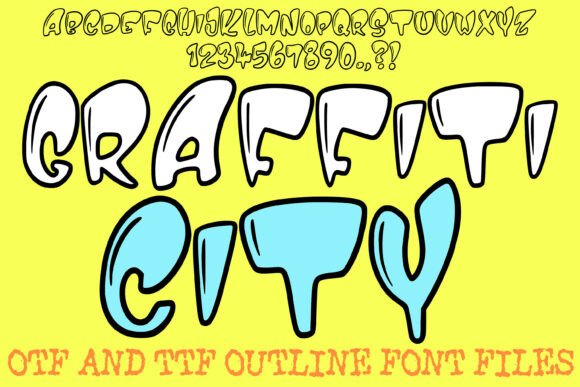
At its core, this specific typeface is a high-energy display font that leans heavily into the "bubble-letter" tradition of modern street murals. But what does that mean for your project? It means the characters feel voluminous and inflated, as if they are about to pop off the screen or page. Unlike standard block letters, these forms feature thick black outlines and strategic interior highlight marks that mimic the reflection of light on wet paint. This design choice creates a sense of three-dimensional depth that flat typography simply cannot achieve.
For anyone working in visual communication, the distinction between a "standard" bold font and an expressive display typeface is crucial. A standard sans serif font communicates stability and neutrality. A script font communicates elegance or personal touch. But a font like Graffiti City communicates action. It captures the rhythmic, swelling energy of metropolitan street art, where every letter and number feels full of life. It is the visual equivalent of turning up the volume on your favorite track—it demands attention and sets a specific, high-octane mood immediately.
Strategic Applications for Modern Branding
While the aesthetic is rooted in street culture, the applications for this font extend far beyond urban landscapes. In fact, the versatility of a premium font like this lies in its ability to add a "human" element to digital and print media. Because the design mimics hand-painted strokes, it introduces an organic feel that sterile, geometric typefaces often lack. This is particularly valuable for brands trying to appear approachable, energetic, or youth-focused.
Consider the specific areas where this type of creative font shines brightest:
- Music and Entertainment: Festival posters, album covers, and band merchandise thrive on high-impact visuals. The bold outlines ensure legibility even when placed over chaotic, colorful backgrounds typical of concert photography.
- Apparel and Merchandise: Streetwear and casual fashion brands rely on typography that feels authentic. This font provides that handcrafted look without the inconsistency of actual handwriting, ensuring your logo prints crisply on t-shirts and hoodies.
- Social Media Content: In a crowded feed, you have milliseconds to grab attention. The "inflated" nature of these letters makes them perfect for Instagram Stories, TikTok overlays, and YouTube thumbnails where readability at small sizes is paramount.
- Logo Design: For creative studios, skate shops, or urban lifestyle brands, a logo needs to tell a story. Using a display typeface with this much personality can serve as the cornerstone of a visual identity that feels dynamic and modern.
Enhancing Visual Consistency and Engagement
One of the biggest hurdles in branding is maintaining visual consistency across different platforms. A design that looks great on a website header might look muddy on a printed flyer. However, fonts designed with thick outlines and high contrast—like this graffiti-inspired option—are inherently robust. They hold up well in various environments, from digital screens to physical packaging.
When you integrate a distinct typeface into your marketing assets, you are doing more than just decorating a page; you are building brand recognition. When your audience sees those characteristic rounded shapes and highlight marks, they begin to associate that visual language with your brand’s voice. This consistency helps build trust. It signals that your brand is cohesive and pays attention to detail, which is a key component of professional presentation.
Furthermore, engagement is often driven by emotion. A standard serif font might feel traditional and serious, but a font that mimics the energy of street art evokes excitement and creativity. If your target audience is younger or culturally active, this typography choice signals that you "speak their language." It transforms a static invitation or a digital product cover into something that feels alive and relevant.
Practical Advice for Pairing and Readability
While a display font is fantastic for headlines and logos, it requires a thoughtful approach when used alongside other text. Because Graffiti City is so bold and expressive, it is best used as a "headline" or "accent" font rather than for body copy. Imagine trying to read a full paragraph of bubble letters—your eyes would tire quickly. Instead, use it to introduce a topic, label a section, or create a focal point.
To create a balanced design, you need to consider font pairing. Because this typeface has rounded, soft edges and a heavy weight, it pairs exceptionally well with clean, geometric sans serif fonts for the body text. A light or medium-weight sans serif provides a visual "rest" for the reader's eye, allowing the headline to pop without overwhelming the layout. Avoid pairing it with overly decorative script fonts or complex serif fonts, as this can create visual clutter and reduce legibility.
Here are a few tips for testing your pairings:
- The Hierarchy Test: Place your headline in the graffiti font and your sub-text in a clean sans serif. Does the eye flow naturally from the big text to the small text? If the fonts fight for attention, simplify.
- The Context Test: View the design on both a mobile phone and a desktop monitor. Ensure the "highlight marks" inside the letters don't fill in when the font is scaled down to smaller sizes.
- The Color Test: Because the font features black outlines, it holds up well against bright colors. However, ensure there is enough contrast between the text color and the background to maintain accessibility standards.
Licensing and Long-Term Value
When investing in design assets, particularly fonts, it is vital to understand the licensing. Most premium fonts come with specific terms regarding commercial use. Whether you are a freelance designer creating a logo for a client, or a small business owner printing your own merchandise, you need to ensure your license covers your intended use.
A high-quality typeface is not just a purchase; it is an investment in your toolkit. It saves you the time and cost of commissioning custom lettering for every new campaign. By reviewing the included font styles—such as bold, regular, or italic variations—you can determine if the typeface offers enough versatility to grow with your brand. For a style as specific as graffiti lettering, having access to different weights can help you create depth in your designs, using heavier weights for main titles and lighter weights for subtitles.
Ultimately, choosing the right typography is about aligning your visual voice with your goals. If your goal is to convey energy, modernity, and a bold creative vision, a font inspired by the city streets might just be the missing piece in your design arsenal. It brings a handcrafted aesthetic to the digital world, proving that sometimes, the best way to stand out is to look like you were painted onto the scene.