Canterpids Font Duo: A Designer's Guide to Elegant Branding
Every now and then, you stumble across a typeface that feels less like a tool and more like a creative partner. It doesn't just sit on the page; it adds a voice, a texture, a feeling. For anyone building a brand or crafting a piece of visual communication, finding that perfect font is a quiet victory. It’s the difference between a design that feels assembled and one that feels intentionally curated. This is where a thoughtfully designed font pairing enters the conversation, offering a pre-harmonized solution to the endless search for typographic balance.
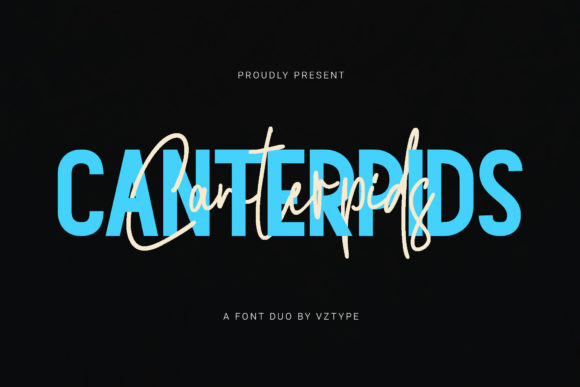
Imagine a font that carries the spontaneous, human touch of a quick, elegant script alongside a companion that provides structure and clarity. That’s the core idea behind the Canterpids Font Duo. It’s not just two fonts sold together; it’s a cohesive system designed to work in tandem. The script style offers the warmth and personality of hand-lettering, perfect for headlines, names, or accents that need to feel personal and inviting. Its flowing lines and subtle imperfections give it a crafted, artisanal quality. Paired with its display counterpart—a cleaner, often more geometric or serif-inspired face—you get an instant foundation for contrast and hierarchy.
Beyond the Pairing: Understanding the Two Styles
The true value of a duo like this lies in understanding the personality of each component. The script font is your storyteller. Think of it for the hero headline on a wedding invitation, the name of a new bakery on its packaging, or the key quote in a social media graphic. It draws the eye and establishes an immediate emotional tone—be it romantic, whimsical, or sophisticated. Its delicate strokes are beautiful, but they demand careful consideration for readability at small sizes or in long paragraphs.
That’s where the display font steps in as the reliable narrator. It’s designed for clarity and impact, making it ideal for subheadings, body text, or any information that needs to be digested quickly and easily. When you use the script style for "Artisan Bread Co." and the display style for "Sourdough & Rye | Est. 2023," you create a visual hierarchy that guides the viewer’s eye logically. You’re not just choosing two fonts; you’re implementing a font pairing strategy that enhances both brand recognition and readability.
Where This Font Pair Truly Shines: Practical Applications
Let’s move from theory to practice. How would you actually use a combination like this in your projects? The applications are surprisingly wide-ranging, touching nearly every corner of modern typography and design.
- Brand Identity & Logo Design: This is a natural home for a font duo. Use the script for the primary brand name to inject personality, and the display for the tagline or descriptor to maintain professionalism. It works beautifully for boutique businesses, creative agencies, lifestyle blogs, or any service where a personal touch is a selling point.
- Packaging Design: On a product label, the script can highlight the product name or a key flavor, while the display font lists ingredients, weight, and company information clearly. This is crucial for packaging design where shelf appeal and quick information scanning are both paramount.
- Social Media Graphics & Marketing Assets: Creating a consistent look across Instagram posts, Facebook ads, and Pinterest pins is streamlined with a pre-matched duo. Use the script for a captivating quote or sale announcement, and the display for the supporting details or call-to-action. This builds visual consistency that followers start to recognize instantly.
- Web Design & Blogs: On a website, the script could be used sparingly for section headers or featured quotes to break up text, while the display font handles navigation, blog post titles, and body copy. This approach improves audience engagement by adding visual interest without sacrificing the professional presentation needed for a clean, modern site.
- Print Materials & Invitations: From business cards to wedding suites, the combination feels inherently special. A script-style name on a business card paired with a clean display for contact details looks polished and memorable. For invitations, it creates a layered, elegant look that sets the tone for the event.
Making It Work: Practical Tips for Implementation
Having a great tool is one thing; using it effectively is another. Here’s some grounded advice for integrating a font duo into your workflow.
First, review the included font styles thoroughly. Does the script come with alternate characters or ligatures? Does the display font have multiple weights (light, regular, bold)? Knowing your full toolkit allows for more nuanced designs. Play with the alternates to avoid repetitive letter shapes, especially in larger script headlines.
Second, consider readability above all. The script style, no matter how beautiful, can become illegible if used for long sentences or at small sizes. Reserve it for short, high-impact text. Always test your designs at the size they’ll be viewed—a script that looks stunning on your 27-inch monitor might become a blurred line on a mobile phone screen.
Third, match the typography to your project’s goal. Is the feeling you’re after classic and romantic? Modern and edgy? The Canterpids Font Duo leans towards a delicate, branded feel, which is perfect for projects aiming for elegance, approachability, or artisanal quality. It might not be the best fit for a gritty, industrial brand, but it’s ideal for a florist, a consultant, a café, or a lifestyle brand.
Finally, mind the licensing. If you’re using the font for commercial projects—client work, merchandise for sale, or marketing materials—ensure you have the appropriate commercial font license. Most premium fonts like this come with clear licensing terms for different uses. Respecting this protects your work and supports the designers who create these valuable design assets.
Choosing the right typeface is a fundamental act of visual communication. A well-chosen font duo