Welcome Ramadhan: The Typeface That Captures Arabian Elegance
There's a moment in every designer's search for the perfect typeface when you stumble upon something that doesn't just fill a space—it transforms it. That's exactly the kind of energy Welcome Ramadhan brings to the table. This Arabic-styled display typeface carries a visual weight and cultural richness that few fonts manage to achieve, and if you've been hunting for a typeface that bridges heritage with contemporary design, this one deserves your attention.
A Font Rooted in Tradition, Built for Modern Creativity
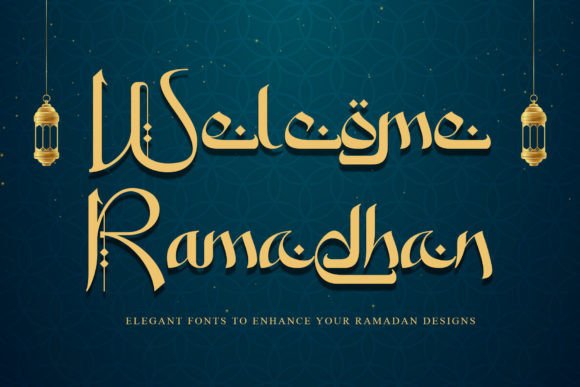
Welcome Ramadhan isn't trying to reinvent the wheel. Instead, it leans into the beauty of the standard Arabian alphabet and delivers characters that feel both familiar and irresistibly stylized. The letterforms have a flowing, organic quality—the kind that makes you want to run your eyes across every word. Each glyph carries subtle curves and decorative swashes that give the font its unmistakable personality.
What makes this typeface particularly useful is its PUA encoding. For anyone who's ever wrestled with accessing special characters in design software, this is a genuine time-saver. Every glyph, every swash, every alternate character is right at your fingertips. No workarounds. No third-party tools. Just open your character map or design application, and everything is there, ready to use.
Where Welcome Ramadhan Truly Shines
Display fonts live and die by context. A typeface that looks stunning on a wedding invitation might fall flat on a product label. Welcome Ramadhan, however, has a versatility that's worth exploring across a surprisingly wide range of applications.
Logo Design and Brand Identity — If you're building a brand that wants to evoke warmth, cultural depth, or spiritual significance, this typeface delivers. Think about restaurants serving Middle Eastern cuisine, boutique travel companies, wellness brands with a mindfulness angle, or any business that wants its visual identity to feel grounded in tradition without looking dated. The font's decorative nature means it works best for logomarks and wordmarks where the name itself becomes the visual centerpiece. Pair it with a clean sans serif for body copy, and you've got a brand system that feels cohesive and intentional.
Packaging Design — On shelf, packaging has about three seconds to communicate a story. Welcome Ramadhan's distinctive character shapes grab attention instantly. It's particularly effective for food packaging, artisanal products, tea brands, spice companies, or any product where the packaging needs to signal authenticity and craftsmanship. The swashes and alternates give you room to customize the look without straying from the font's core aesthetic.
Social Media Graphics and Digital Content — Here's where many decorative fonts struggle: screen readability. Welcome Ramadhan's bold, well-defined letterforms actually hold up reasonably well in digital formats, especially when used at larger sizes for headlines, quote graphics, or event announcements. Instagram posts, Pinterest pins, and Facebook headers all benefit from a typeface that stops the scroll. During seasonal campaigns—particularly around Ramadan, Eid, or cultural celebrations—this font can become a visual anchor for your entire content calendar.
Invitations and Print Materials — Wedding invitations, event flyers, dinner party menus, charity gala programs—these are the kinds of projects where a premium font like Welcome Ramadhan earns its place. The ornamental quality of the letterforms adds a layer of elegance that generic fonts simply can't replicate. When you're printing something meant to feel special, the typography should match that intention.
Posters and Editorial Layouts — Magazine covers, book chapter headings, poster designs, and editorial spreads all benefit from a strong display typeface. Welcome Ramadhan works beautifully as a headline font paired with a neutral serif or sans serif for body text. The contrast creates visual hierarchy naturally, guiding the reader's eye exactly where you want it.
Merchandise and Physical Products — Tote bags, mugs, t-shirts, notebooks—merchandise design is all about making something people want to pick up and carry with them. A typeface with character (literally and figuratively) makes that job easier. Welcome Ramadhan's aesthetic works particularly well for products that celebrate culture, spirituality, or artistic expression.
Making It Work: Practical Typography Advice
Having a beautiful font is one thing. Using it well is another. Here are some grounded recommendations for getting the most out of Welcome Ramadhan in your projects.
Font Pairing Matters — Display fonts like Welcome Ramadhan are designed to command attention, which means they don't always play well with other expressive typefaces. The safest and most effective approach is pairing it with something understated. A geometric sans serif like Montserrat or a clean serif like Lora can provide the balance your layout needs. Test a few combinations before committing—what looks good in your head doesn't always translate to the screen or page.
Readability Is Non-Negotiable — Decorative fonts are tempting to use everywhere, but resist that urge. Welcome Ramadhan is at its best in headlines, titles, and short phrases. For longer passages—body copy, product descriptions, blog paragraphs—switch to a more readable typeface. Your audience will thank you, and your message will actually land.
Size and Spacing — Because of its detailed character shapes, this font benefits from generous sizing and slightly increased letter spacing. Cramping it into tight spaces or using it at small sizes will mute its impact. Give it room to breathe, and the elegance will come through.
Explore the Full Character Set — One of the advantages of a PUA-encoded font is the breadth of design options available. Don't just type your words and move on. Open the glyph panel in your design software and explore the alternates, swashes, and decorative elements. You might find a ligature or stylistic variation that elevates your entire composition.
Aligning Typography with Your Project Goals
Before you drop any font into a project, ask yourself a simple question: what should this typography communicate? If the answer involves warmth, cultural resonance, celebration, or artistic flair, Welcome Ramadhan is a strong candidate. If you need something clinical, corporate, or ultra-minimal, it's probably not the right fit—and that's perfectly fine.
The best design decisions come from matching the tool to the task. A bakery branding itself around family recipes and Middle Eastern flavors? This typeface makes immediate sense. A fintech startup pitching venture capital? Probably not. Understanding your audience and your message is the first step in choosing the right font style, and once that clarity is in place, selecting and applying a typeface like Welcome Ramadhan becomes intuitive.
Also worth noting: always verify the licensing terms before using any font in commercial projects. Welcome Ramadhan is designed as a commercial font, which means understanding what the license covers—client work, merchandise, digital products, print runs—saves you headaches down the road. Most premium fonts come with clear licensing agreements, and respecting those terms is part of professional practice.
Bringing It All Together
Typography is one of those design elements that works hardest when it's least noticed—but display fonts like Welcome Ramadhan exist in a different space. They're meant to be seen, admired, and remembered. They carry cultural weight, emotional resonance, and visual personality that shape how people experience your brand, your message, and your work.
Whether you're designing a logo for a new business, crafting social media content for an upcoming campaign, preparing invitations for a meaningful event, or building out packaging for a product that deserves better than a default font—Welcome Ramadhan offers a distinctive voice. It's the kind of typeface that doesn't just sit on the page. It speaks.
Take the time to explore its characters, test it in real layouts, and pair it thoughtfully with complementary fonts. The results might surprise you—and more importantly, they'll resonate with the people you're trying to reach.